Students who fail the course
Failure rate. Lower is better.
Traditional lecture33.8%
Active learning21.8%
Freeman et al., 2014. A meta-analysis of 225 studies.
How Code Nexus teaches
Each episode places you inside a fictional team with a practical decision to make. Read the brief, learn the idea, try the task and inspect the result. Later work brings earlier concepts back into use. The research below informs these learning techniques; it does not measure outcomes for Code Nexus as a whole.

The problem with watching
Most online tech courses are built around watching. It feels productive, but it builds recognition rather than recall. Decades of research point the same way. People learn more when they do the work, retrieve what they know, and mix topics together.
Failure rate. Lower is better.
Freeman et al., 2014. A meta-analysis of 225 studies.
Share of material recalled. Higher is better.
Roediger & Karpicke, 2006, experiment 2.
Test score. Higher is better.
Rohrer & Taylor, 2007.
Six principles
Active learning cuts course failure rates by about a third (Freeman et al., 2014).
In Code Nexus: Every scene ends in real work, in one of 28 practical workspaces: a code studio, terminal, source control, cloud console, Docker, Kubernetes, a prompt lab and more.
Skills stick when they are learned in the setting where they are used (Lave and Wenger, 1991).
In Code Nexus: You are the new hire. Tasks arrive as tickets, emails and chat from teammates, the way they do at work.
Recalling something beats re-reading it, a week later (Roediger and Karpicke, 2006).
In Code Nexus: Each episode opens with a warm-up drawn from earlier episodes and ends with a scored check.
Spreading practice out beats cramming, across 317 experiments (Cepeda et al., 2006).
In Code Nexus: The daily review brings questions back 1 to 2, 3 to 5, 7 to 10, 14 to 20 and 30 to 45 days after you finish an episode.
New learners do better with guided examples that fade as they gain skill (Sweller, 1988).
In Code Nexus: A key idea, a worked example and trap warnings come before each task. Hints unlock one at a time.
Feedback with an explanation beats a bare right or wrong (Butler, Karpicke and Roediger, 2008).
In Code Nexus: A wrong answer gets a reason specific to the option you chose, not just a red cross.
A major review rated ten popular study techniques. Highlighting and re-reading scored low (sorry, highlighters). The ones at the top are the ones Code Nexus is built from.
Works across learners, topics and ages
Helps, with limits
Feels productive, does little
Anatomy of an episode
An episode is a small, complete loop. Here is what happens from the first question to the review that finds you again days later, and the principle behind each step.
Three questions from earlier episodes the new one builds on.
Retrieval and mixing
A teammate hands you a real problem, with a reason to care.
Situated learning
A key idea, a worked example and the traps to watch for.
Worked examples, low cognitive load
In some coding scenes, guess what the code will do before you run it.
Pre-testing
Try the task in a Python workspace or a simulator. Inspect the supplied check and its result.
Active learning
Hints you reveal one at a time, then a nudge from a teammate.
Scaffolding
Episodes split into parts, with a natural place to stop.
Chunking
Takeaways, then a scored check that explains every answer.
Feedback
The daily review brings it back, just before you would forget.
Spacing
Designed to be read, not skimmed
Technical text is dense. New learners can't yet tell the key idea from the detail, so they highlight everything, which works out the same as highlighting nothing. We do that work for you. Every note leads with the one idea that matters, marks the terms you need, flags the traps, and walks through a worked example line by line. In research this is called signalling, and it helps most when the material is new to you.
Across the course that means 339 key ideas, 382 trap, rule and tip boxes, 239 worked examples (222 annotated line by line) and a glossary of keyword definitions that appear right where the word does.
medium · taskThe difficulty is labelled before you start.
One highlighted sentence before any detail, for the reader who skims.
Signalling
Terms you need get a dotted underline. Hover, focus or tap for a plain-English definition.
Words next to meaning
Exact names look like code. Emphasis is reserved for the words that carry the point.
Signalling
The common mistake is named before you make it. Never more than two per note.
Signalling, coherence
Numbered notes sit beside the code they explain, so you never hunt for the link.
Worked examples
Where the exam words it differently, the note says how.
Transfer to the certification
Green is right, red is wrong, amber is a trap. Colour always comes with an icon and words.
Never decoration, so an underline is always worth reading.
Episodes split into parts with a pause point between them, so you can stop cleanly.
Keyboard shortcuts, reduced-motion support, and layouts that hold up on a phone.
Stories and role play
A story gives every concept a reason to exist. Research on narrative comprehension suggests people follow and remember connected stories more easily than a list of facts. In Code Nexus, the story is the work.
You play a junior engineer. Teammates have distinct personalities, ask for decisions and push back. That is role play: it moves you from knowing about a skill to using it, the way simulation training does in medicine and aviation.
Motivation research names competence, autonomy and relatedness as its drivers (Ryan and Deci, 2000). The cast is the relatedness: people you want to help. The seasons are a career arc, from your first day in IT to releasing AI systems, and each season finale is a boss scene with an optional timer that never fails you.
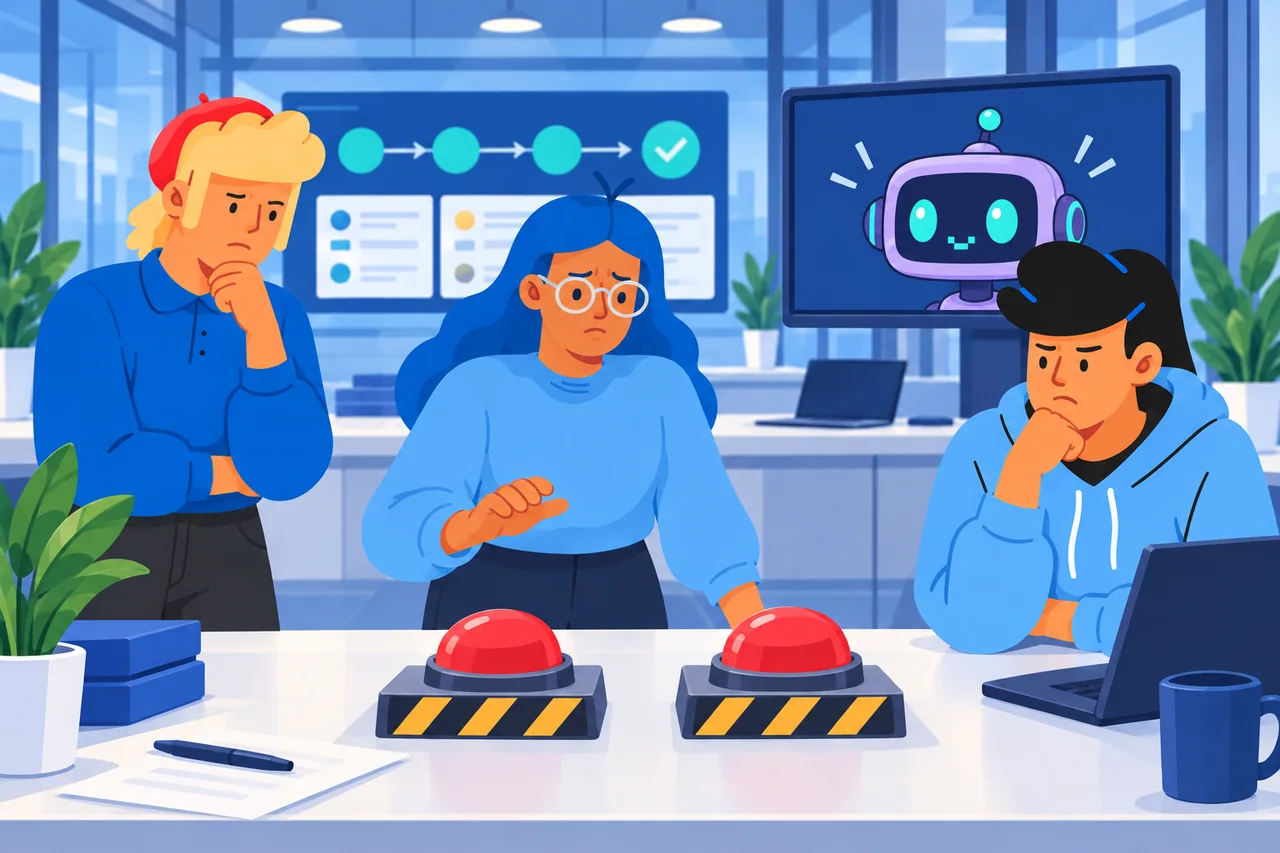
Team chat, a sample

Kabelo Mokoena
so the bill doubled and a storage bucket is public. both. at the same time.
Priya Naidoo
Cost is my first question. Who can read it is Lydia's. Decide the order before you touch anything.
Maya Chen
Contain first, then count. You make the call. I will ask you why. Maya Chen
 Kabelo Mokoena
 Amara Okafor
 Priya Naidoo
 Lydia Roe
 Leo Martins
 Jax Rivera
Failure is part of the lesson
Research on productive failure finds that struggling with a problem first, then being taught, leads to deeper understanding than being told the answer up front (Sinha and Kapur, 2021). So we let you try, and we make sure being stuck never means being alone.
Remembering, not just finishing
Memory fades quickly, then slowly. Each time you recall something just before it slips, it lasts longer. So new episodes open with a short warm-up on what they build on, and a daily review pulls questions from episodes you finished days or weeks ago. A confidence-by-area view then points you to the episode to revisit for your weakest topic. Think Groundhog Day, except each loop gets shorter.
Days a memory lasts before half of it fades
Successful reviews so far (0 is right after you finish the episode)
Aligned to the certifications employers recognise
Every scene and every question in Code Nexus is mapped to an official objective from the certification it prepares you for. These are exams set by Microsoft, AWS, GitHub, the Linux Foundation, the Python Institute and the Linux Professional Institute, used by employers around the world to check skills. The story is how you learn the skill. The objectives make sure nothing on the exam is left out.
Each exam's published objectives are stored with the date we checked them and a link to the provider's page.
Each one points at an official objective. Our checks reject any tag that is not a real objective.
"On the exam" notes connect what happened in the scene to the words the exam uses.
A scanner reports anything taught but not practised, and readiness checkpoints are weighted like the real exam.
Your skills build episode by episode. Each badge marks the readiness check for a real exam, in the order you meet them.
Episode number, from E01 to E70. E15B and E34B bring the authored total to 72. Each badge sits at its readiness check.
| Certification | After episode | Certifications prepared so far |
|---|---|---|
| PCEP-30-02 Certified Entry-Level Python Programmer | 10 | 1 |
| PCAP-31-03 Certified Associate in Python Programming | 16 | 2 |
| 010-160 Linux Essentials | 19 | 3 |
| GH-900 GitHub Foundations | 24 | 4 |
| AZ-900 Microsoft Azure Fundamentals | 28 | 5 |
| CLF-C02 AWS Certified Cloud Practitioner | 32 | 6 |
| AI-901 Microsoft Azure AI Fundamentals | 37 | 7 |
| AIF-C01 AWS Certified AI Practitioner | 40 | 8 |
| AI-103 Developing AI Apps and Agents on Azure | 48 | 9 |
| KCNA Kubernetes and Cloud Native Associate | 56 | 10 |
| AZ-400 Designing and Implementing Microsoft DevOps Solutions | 63 | 11 |
157 of 157 objectives across 11 certifications.

PCEP-30-02 · Python Institute
Certified Entry-Level Python Programmer

PCAP-31-03 · Python Institute
Certified Associate in Python Programming

010-160 · Linux Professional Institute (LPI)
Linux Essentials

GH-900 · GitHub (exam delivered through Microsoft)
GitHub Foundations
AZ-900 · Microsoft
Microsoft Azure Fundamentals

CLF-C02 · Amazon Web Services
AWS Certified Cloud Practitioner
AI-901 · Microsoft
Microsoft Azure AI Fundamentals

AIF-C01 · Amazon Web Services
AWS Certified AI Practitioner

AI-103 · Microsoft
Developing AI Apps and Agents on Azure

KCNA · The Linux Foundation and CNCF
Kubernetes and Cloud Native Associate

AZ-400 · Microsoft
Designing and Implementing Microsoft DevOps Solutions
The material is written by educators who hold Cisco, Microsoft and CompTIA instructor certifications. Meet the team.
Code Nexus is an independent training provider. It is not affiliated with or endorsed by the certification providers named on this page, and prepares learners for exams that each provider issues. Exam names and badges are trademarks of their owners: Python Institute (Open Education and Development Group); Linux Professional Institute; GitHub, Inc. (Microsoft); Microsoft Corporation; Amazon Web Services, Inc; The Linux Foundation.
Built with care, by the numbers
The team includes Cisco Certified Systems Instructors, Microsoft Certified Trainers and CompTIA-certified educators, and the course was shaped with young learners, working professionals, part-time learners and career returners.
Counted from the authored curriculum when this page is built.
Episode 1 is ready.
The first 15 episodes are free. No setup, no credit card, and no need to arrive already knowing the answers.
Code Nexus prepares you for external exams. Each certification is issued by its provider.